
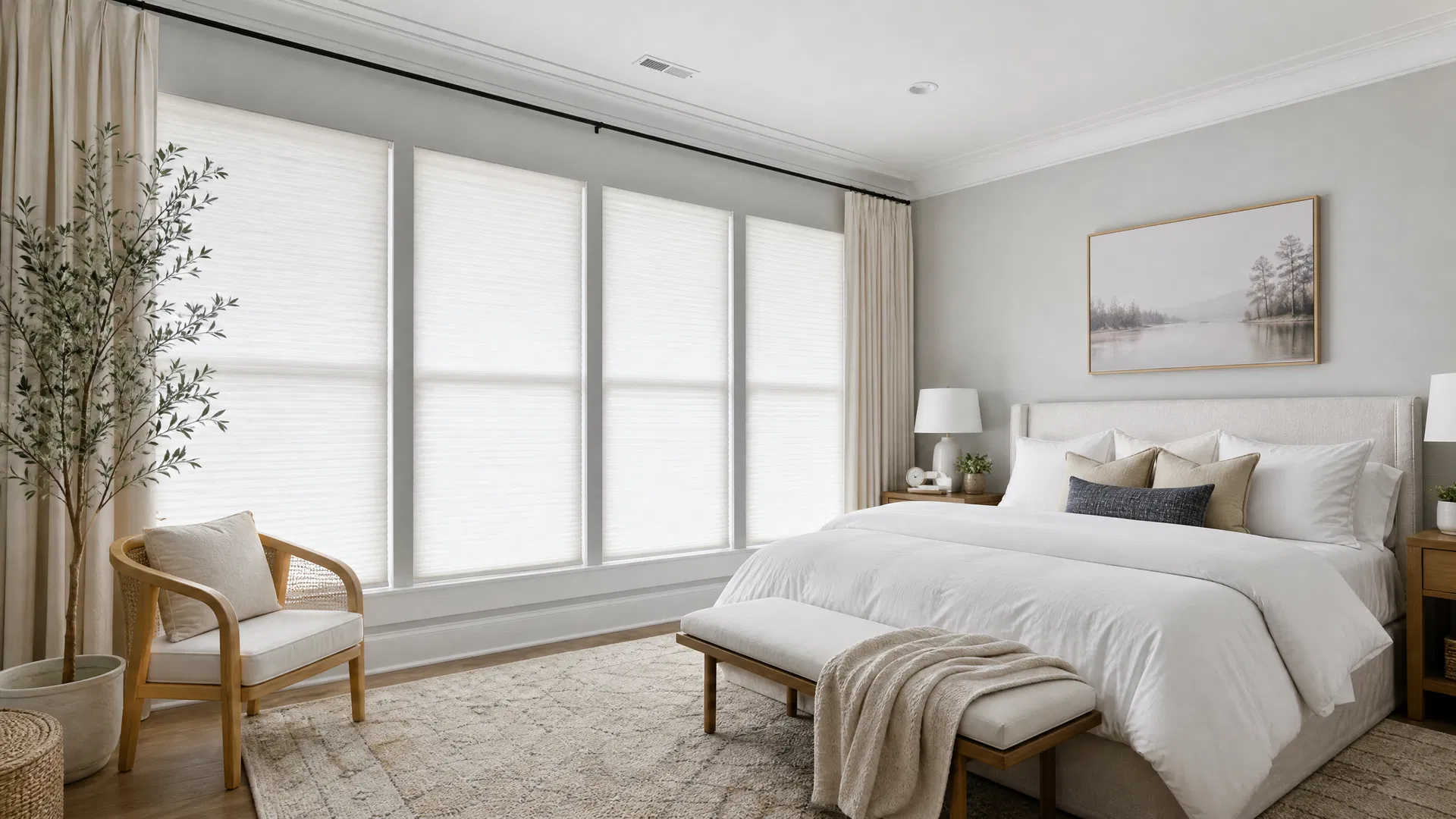
Cellular shades, also called honeycomb shades, are designed to do more than cover a window. Their folded cell structure traps air between the room and the glass, which can help reduce heat transfer and make a room feel more comfortable. If you are comparing cellular shades in Raleigh, NC, the main choice is often between single-cell and double-cell construction.
Blind Provision helps Triangle homeowners compare cell sizes, light-control levels, operating systems, and specialty options before ordering. The right choice depends on the window size, room, sun exposure, privacy needs, and how often you plan to adjust the shade.
How cellular shades work
Cellular shades are made with connected fabric pockets that form horizontal cells. Those cells create a layer between the window and the room. They also give the shade a soft, structured appearance that works well in bedrooms, living rooms, nurseries, and home offices.
Cellular fabrics can be selected in light filtering or blackout styles. Light filtering fabric gently diffuses sunlight, while blackout fabric is designed for stronger light control and privacy. As with any window treatment, installation and side gaps affect how dark a room becomes.
Single-cell cellular shades
Single-cell shades use one layer of air pockets. They are generally lighter than double-cell shades and can be easier to operate on larger windows. Larger single-cell pleats can also create a clean, proportional appearance on wide openings.
Single-cell shades may be a good fit when you want:
- A lighter window treatment
- A simple, clean look
- Diffused daylight
- A practical option for larger windows
- A balance between comfort and easy operation
The exact performance depends on the fabric, cell size, window, installation, and room conditions.
Double-cell cellular shades
Double-cell shades use two layers of air pockets. They are often selected when insulation and comfort are higher priorities. The additional cell structure can help create more separation between the window glass and the interior.
Double-cell shades may be worth considering for:
- Bedrooms with hot or cold windows
- Rooms with strong sun exposure
- Windows where comfort is more important than the lightest operation
- Homeowners who want to prioritize insulation within their window-treatment choices
Double-cell does not mean the shade will eliminate heating or cooling costs. Its insulating construction can help reduce heat transfer, with results affected by the fabric, fit, and window.
Which cell size is right for your window?
A common selection process starts with the size of the opening. Smaller or standard windows may work well with a smaller cell or double-cell design. Large windows may benefit from a lighter single-cell shade with larger pleats.
The appearance matters too. A small cell on a large window can look overly busy, while a large pleat on a small window may feel disproportionate. Samples make this easier to evaluate before ordering.
Light filtering versus blackout cellular shades
Light filtering cellular shades soften sunlight and provide moderate privacy. They are often a good choice for living rooms, dining rooms, and rooms where you want daylight to remain part of the design.
Blackout cellular shades are a better starting point for bedrooms, nurseries, and media rooms. They block light through the shade fabric, but edge gaps and the window installation still affect the total result. Discuss inside mount, outside mount, and any side-gap solution during your consultation.
Top-down bottom-up cellular shades
Top-down bottom-up shades open from the bottom, lower from the top, or use both directions. This makes it possible to bring in daylight while keeping the lower portion of the window covered for privacy.
They can be helpful for:
- Street-facing bedrooms
- Bathrooms with suitable window conditions
- First-floor rooms
- Rooms where you want sky light without a direct view into the space
Control availability depends on the product and size. Cordless and motorized options may also be available for selected configurations.
Cellular shades for Raleigh's climate
Raleigh homes can experience bright summer sun, changing temperatures, and rooms that feel different depending on window direction. Cellular shades can be part of a broader comfort strategy, especially when paired with appropriate fabric, careful measuring, and consistent installation.
There is no single energy-saving figure that applies to every home. Ask us about available performance ratings for the products you are comparing, alongside their fit and how you plan to use them.
Can cellular shades cover specialty windows?
Some cellular shade collections include solutions for arches, skylights, vertical openings, and other specialty shapes. Large patio doors may also require a vertical cellular or another wide-opening solution. Each application has different operating and size limits, so professional measuring is especially important.
Request a cellular shade consultation in Raleigh, NC
Blind Provision brings cellular shade samples to homes and businesses across Raleigh, Cary, Apex, Durham, Chapel Hill, and the surrounding Triangle. You can compare cell sizes and light-control levels in the actual room before making a decision.
Frequently Asked Questions
Are double-cell shades better than single-cell shades?
Neither is best for every window. Double-cell shades are often selected for additional insulation, while single-cell shades are lighter and may be better suited to larger windows.
Do cellular shades help with energy efficiency?
Their honeycomb structure can help reduce heat transfer. Results depend on the product, fabric, window, installation, and room conditions.
Are cellular shades good for bedrooms?
Yes. Blackout cellular shades can provide strong light control and privacy, while top-down bottom-up operation can add daylight without opening the lower portion of the window.
Can cellular shades be motorized?
Selected cellular shade configurations offer motorized control. The exact availability depends on size, product, and operating system.