Custom cellular shades for Raleigh, NC area homes and businesses
We bring cellular shade samples to your Raleigh, NC area home so you can compare the pleats, light, and privacy in each room. Measuring and installation are part of our service.
Custom blinds, shades, exterior shades, and more.
Request a free consultation 919-796-4732
Energy efficiency, insulation, and soft diffused light
Honeycomb fabric adds a layer of insulation at your windows and softens the light. Choose light-filtering or room-darkening shades, with operating options for your daily routine.
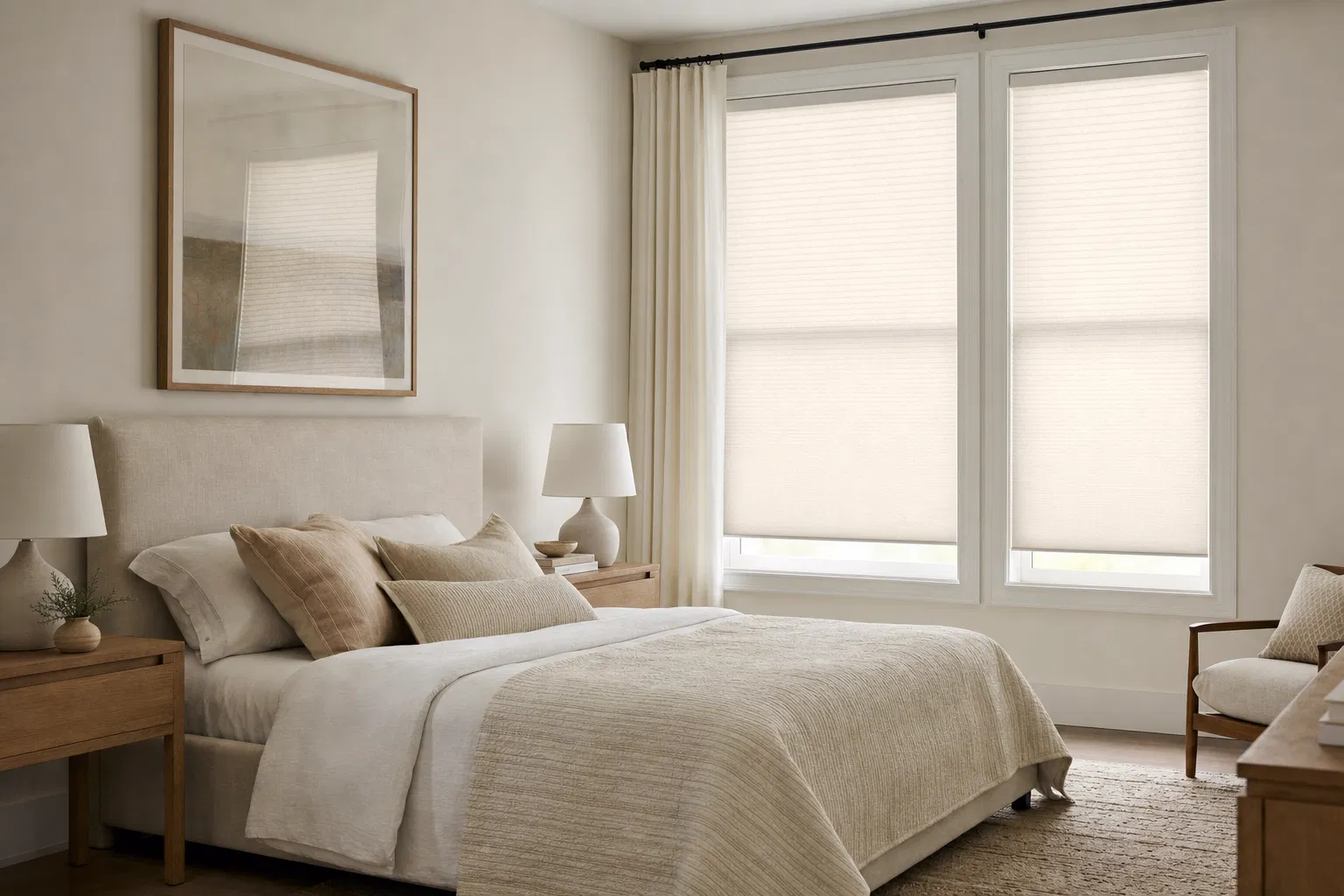
We bring cellular shade samples to your Raleigh, NC area home so you can compare the pleats, light, and privacy in each room. Measuring and installation are part of our service.
Honeycomb pockets hold air between the glass and your room. Compare the available cell constructions along with the fabric and fit.
Compare light-filtering and room-darkening fabrics, colors, and textures. Top-down/bottom-up options let light in above eye level.
Choose cordless or motorized operation to suit how you use each window, from bedrooms to hard-to-reach openings.
Popular Applications
Room-darkening fabrics reduce incoming light while the honeycomb construction adds insulation.
Compare cordless operation to avoid hanging operating cords, along with room-darkening fabrics for daytime naps.
Light-filtering fabric softens daylight, with air pockets that add insulation near large windows.
Soften screen glare and add insulation at the windows where you work.
Insulate glass-heavy spaces that are prone to temperature extremes.
Cellular shades are also called honeycomb shades. Viewed from the side, the fabric forms pockets that hold air. Single-cell and double-cell designs differ in their construction, but the full product matters more than the cell count alone.
Fabric, fit, window condition, and how often the shade stays closed all affect insulation. We’ll compare the available constructions for your windows. A cellular shade can help reduce heat transfer, but it does not repair a drafty frame or replace a damaged window.
Read the single-cell and double-cell comparisonLight-filtering cellular fabric gives you soft daylight. Room-darkening fabric is worth comparing for bedrooms and media rooms. The fabric and the coverage at the edges both affect the result.
Top-down/bottom-up operation lets you lower the top of the shade while keeping the lower part of the window covered. Cordless and motorized options address how you raise and lower the shade. Available combinations depend on the product and window size, so we confirm them before ordering.
They can reduce heat transfer through a window, but there is no single savings figure that applies to every home. The windows, climate, fit, fabric, and daily use all matter. We focus on choosing an appropriate shade and fit rather than promising a percentage reduction.
No. Compare the complete products, including fabric, dimensions, operating options, and insulation performance where ratings are available. A double-cell construction adds air pockets, but cell count alone is not enough to choose a shade.
Light-filtering fabric can soften daylight while limiting the view into the room, depending on the fabric and lighting. A top-down/bottom-up shade can also leave the upper part of the window open while covering the lower portion. We’ll compare those approaches with the sightlines at your windows.
Available sizes depend on the fabric and operating system. We measure the opening, check product limits, and discuss whether one shade or several sections makes more sense. For a sliding door, we can also compare treatments designed to move aside for access.
Explore vertical blinds for doorsFREE CONSULTATION
Tell us which spaces you want to update. We’ll arrange a free visit, bring samples, and measure so you can compare the options before ordering. You don’t need to have a product picked out.
“They were happy to provide multiple quotes and so accommodating when changes occurred.”