
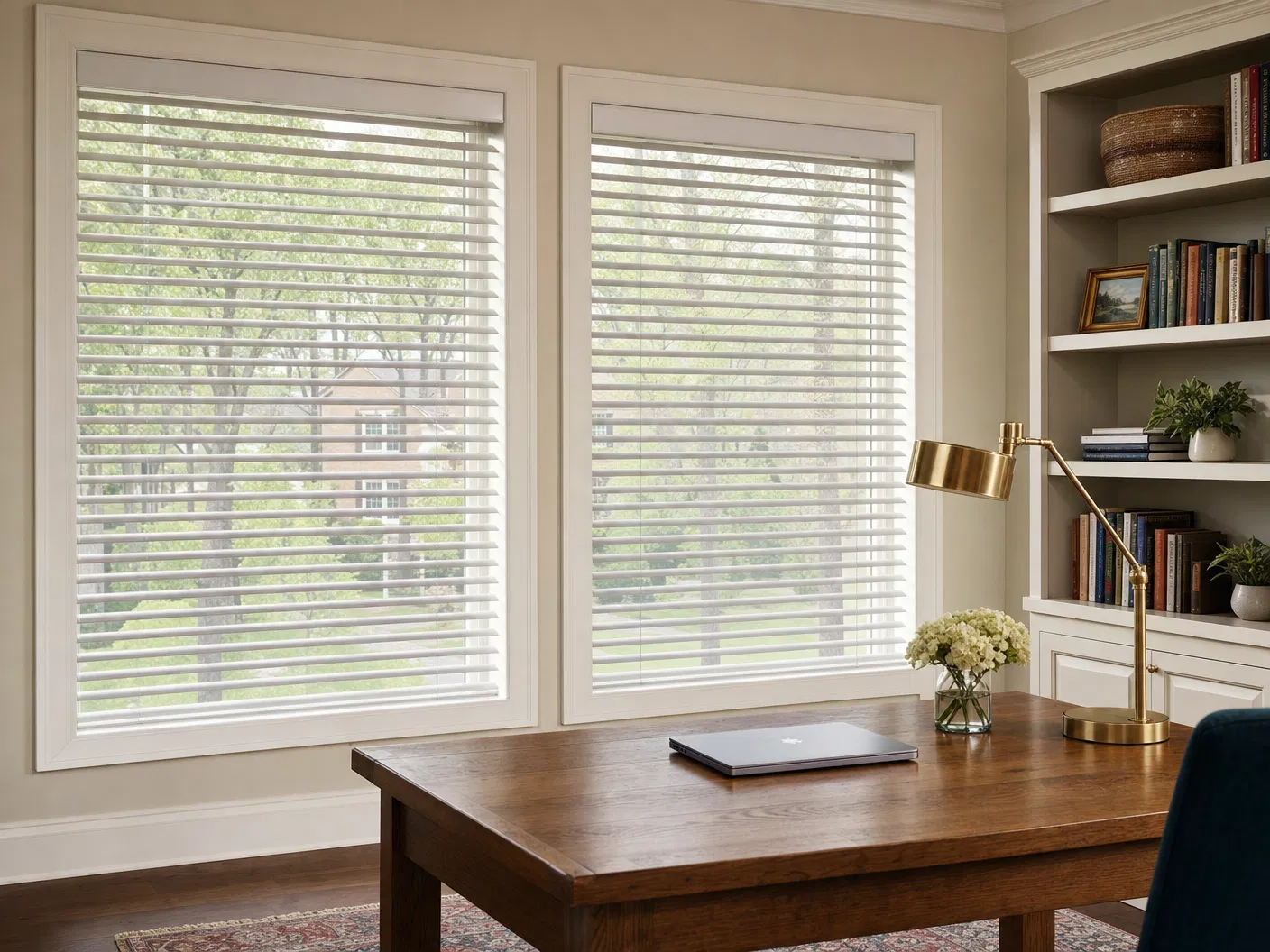
Choosing custom blinds is easier when you start with the problem you want to solve. Is the room too bright, too exposed, too warm, difficult to operate, or simply unfinished? That answer helps narrow the product category before you choose color and texture.
Roller and cellular shades can provide light filtering, room-darkening, or blackout fabrics. Solar shades can reduce glare while preserving a daytime view. Faux wood and vertical blinds provide adjustable slat control. Roman and woven shades can add texture while using liners for stronger privacy.
Match the product to the room. Kitchens and bathrooms may need a material suited to humidity. Bedrooms often need stronger privacy and darkness. Home offices may benefit from glare control. Patio doors and wide openings may need vertical, sliding, or specialty solutions.
Cordless options can create a cleaner appearance. Motorized options may help with tall, grouped, or hard-to-reach windows, but availability depends on the product and size. Professional measuring also matters because mount type, trim, handles, depth, and edge coverage affect the result.
Three openings, three different decisions
A kitchen or bathroom window
Start with moisture exposure and cleaning. A window near splashes needs a different review from one across a well-ventilated room. Compare faux wood samples and the selected material’s care instructions. Moisture resistance does not mean the whole blind can be soaked.
A street-facing room
Decide whether you want to tilt slats for changing light or prefer a continuous fabric surface. Think about privacy when the lights are on after dark, not only how the sample looks during the day. A bedroom may need more light control than an entry or living room.
A sliding door
Notice which side opens and where people walk. The treatment needs space to move aside without interfering with the handle or furniture. Compare a vertical blind with other available wide-opening treatments after reviewing the dimensions.
Bring a short window list
Note the rooms, your main concern in each, and any timing needs. You can choose different products in related colors. Photos and rough dimensions can start the discussion; our team takes the measurements used for ordering.
Frequently Asked Questions
How do I choose between blinds and shades?
Start with the room’s light, privacy, material, and operating needs. Samples make the differences easier to compare.
Are custom treatments worth it?
Custom treatments let you compare materials and controls for the actual opening, with mounting details checked before ordering. Their value depends on what you need from the window and the options available for it.